

Carbon usage optimization entails strategic processes of measuring, managing, and actively reducing greenhouse gas emissions at their source across business operations, supply chains, and infrastructure. With global warming indicators, greenhouse gas levels, and the rate of human-induced heating at an all-time high, commercial and industrial operators are under much more scrutiny and pressure to comply with environmental regulations and standards than ever before.
Recent climate disasters like the severe flash floods in the Nepal-Tibet border region, the deadly flash flood in the Grand Canyon in late August 2026, and severe storms in the United States bring the effects of global warming and climate change to mind.
While there are many solutions and measures recommended to reduce carbon footprint/ emissions, many recommendations often end up counterproductive or impractical for C&I operators.
This article examines practical ways commercial and industrial operators can implement carbon usage optimization practically and effectively.
What is Carbon Usage Optimization?
Carbon usage optimization involves measuring, managing, and reducing greenhouse gas emissions generated by business operations, infrastructure, and supply chains. For commercial and industrial (C&I) operators, optimizing carbon usage also means improving energy efficiency, reducing fuel consumption, and making better use of renewable energy.
Carbon optimization begins with understanding how energy is consumed, where it comes from, and how efficiently it is being used. For example, a business that relies on diesel generators can reduce its carbon emissions by improving generator efficiency, reducing unnecessary runtime, optimizing generator loading, or replacing some generator usage with solar and battery storage. A manufacturing facility can also reduce its carbon footprint by identifying energy-intensive equipment and addressing inefficient operating patterns.
This makes carbon usage optimization closely connected to energy management. The more efficiently a business generates and consumes energy, the greater its opportunity to reduce emissions without compromising operations.
Understanding Scope 1, Scope 2, and Scope 3 Emissions
Understanding a company's carbon footprint requires identifying where its emissions come from. Greenhouse gas emissions are commonly categorized into three scopes.
Scope 1 emissions refer to direct emissions from sources that a company owns or controls. For C&I businesses, this can include emissions from diesel generators, company-owned vehicles, boilers, and other fuel-burning equipment.
Scope 2 emissions are indirect emissions associated with the generation of purchased electricity, steam, heating, or cooling consumed by the organization. Although the emissions occur at the point of energy generation, they are associated with the company's energy consumption.
Scope 3 emissions cover other indirect emissions throughout a company's value chain, including purchased goods and services, transportation, business travel, waste, and the use of sold products.
For many C&I operators, improving energy efficiency and managing on-site energy generation can provide a practical starting point for reducing Scope 1 and Scope 2 emissions.
Why Is Carbon Usage Optimization Important for Businesses?
While carbon usage optimisation is important for the environment, improving carbon efficiency also offers significant financial and operational advantages for commercial and industrial businesses. By optimizing energy consumption and reducing reliance on fossil fuels, companies can substantially lower their utility bills and operational costs over time.
Proactive carbon management helps organizations ensure compliance with increasingly strict environmental regulations, avoiding potential penalties and reputational damage.
1. Energy Cost Savings
Carbon usage optimisation enables commercial and industrial operators to save on energy costs. Embracing fossil fuel-dependent energy systems, clean energy technologies, and low-cost alternatives such as photovoltaic systems helps reduce operating costs by a mile.
For businesses that rely heavily on diesel generators, especially in developing and complex energy markets, even small improvements in fuel efficiency can have a significant financial impact over time. Monitoring generator performance, identifying excessive fuel consumption, and reducing unnecessary runtime can help businesses get more useful energy from every litre of fuel consumed.
This makes the relationship between carbon reduction and cost savings important because the same inefficiencies that increase emissions can also increase operating costs.
2. Carbon Usage Optimisation Improves Energy Efficiency
Carbon optimization encourages businesses to examine how efficiently their facilities, equipment, and energy systems operate.
Identifying energy-intensive equipment, abnormal consumption patterns, and inefficient operating schedules can help businesses reduce energy waste while maintaining the same level of output. Carbon usage optimization is especially valuable for manufacturing, healthcare, hospitality, retail, telecommunications, and other industries where energy consumption is closely tied to daily operations.
3. Enhanced Brand Reputation
Carbon usage optimisation plays an important role in reducing carbon emissions. When companies implement best practices for carbon usage optimisation and reduce carbon emissions, it sends a powerful signal to climate-conscious stakeholders, including consumers, corporate partners, and investors. This helps demonstrate a verifiable commitment to sustainability, enhances overall brand value, and strengthens market reputation in an increasingly eco-sensitive global economy.
Also, proactive environmental stewardship helps organizations stay ahead of tightening regulatory standards. By establishing robust carbon management practices early, businesses minimize the risk of regulatory penalties, avoid potential legal complications, and protect themselves against reputational damage associated with non-compliance.
4. Improved Business Resilience
Energy efficiency and carbon optimization can also strengthen business resilience. Businesses that understand their energy consumption and have greater visibility into their energy sources are better positioned to respond to changes in fuel prices, grid reliability, energy demand, and environmental requirements.
Instead of reacting to rising costs or energy disruptions after they occur, commercial and industrial operators can use energy data to anticipate problems and make proactive decisions.
Carbon Offset VS Carbon Allowance
Carbon offsets and carbon allowances are both related to managing greenhouse gas emissions and carbon usage optimization, but they serve different purposes.
What is a Carbon Offset?
With carbon offsets, companies either make efforts to remove carbon emissions from the atmosphere or avoid emitting a target amount in the first place. For example, a company may support a verified reforestation, renewable energy, methane capture, or other emissions-reduction project and use the resulting credits to compensate for some of its own emissions. C&I operators can use carbon offset initiatives to address emissions that are difficult to eliminate immediately. However, offsetting should not be treated as a substitute for reducing emissions at the source.
What is a Carbon Allowance?
A carbon allowance represents a permitted amount of greenhouse gas emissions under a regulated emissions trading system. In countries or regions that use emissions trading like the European Union, organizations receive or purchase allowances that permit them to emit a specified amount of greenhouse gases. Depending on the system, organizations that reduce emissions below their allocation can sell surplus allowances, while organizations exceeding their allocation purchase additional allowances.
In the EU, companies are only allowed to emit carbon tonnes equivalent to the number of allowances they have per year. One carbon allowance (called an EU Allowance) gives a company the legal right to emit one tonne of carbon dioxide or its equivalent.
Companies can buy allowances every year, but the EU reduces the total number of available allowances every year. In Canada, carbon limits are not set; rather, a performance-based emissions limit system is used. Each facility is given an annual emissions limit based on its production output and the average emissions efficiency of its specific sector. When companies go past these limits, they would have to pay $110 CAD per extra tonne of carbon dioxide emitted.
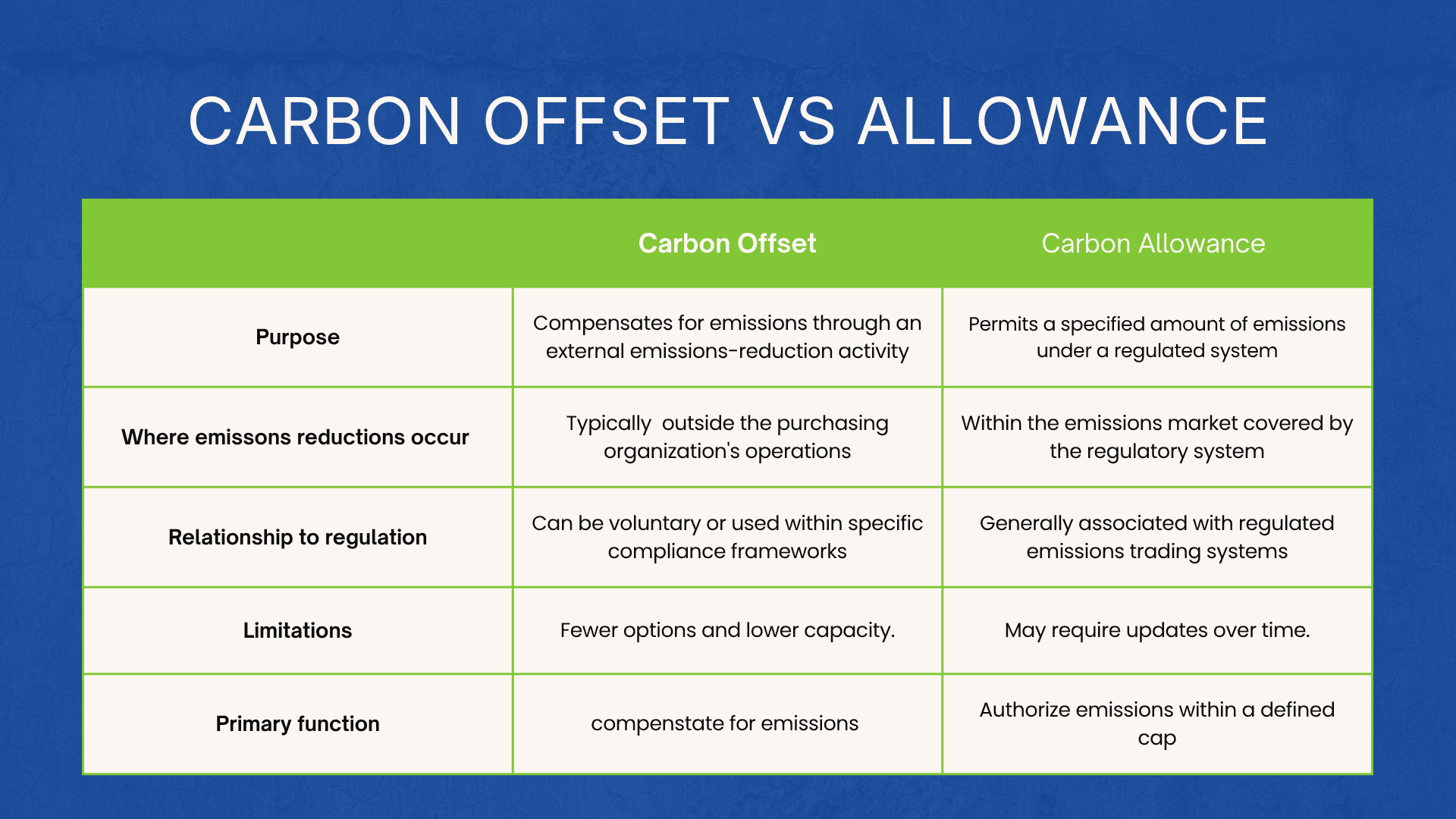
The difference is important to know because reducing emissions at the source, purchasing offsets, and complying with an emissions trading system are different approaches to carbon management.
Practical Ways To Achieve Carbon Usage Optimization
Effective carbon optimization starts with understanding where emissions are generated and which operational activities contribute most significantly to them.
Rather than adopting generic sustainability measures, C&I operators can focus on practical changes that improve both environmental and operational performance.
1. Conduct a Carbon Footprint Assessment
The first step is to establish a baseline. To do that, you will need to identify how much greenhouse gas or carbon emissions are associated with the operations of your organisation. It is also important to determine which activities contribute most to the overall footprint of your organisation. For energy-intensive businesses, this should include data on electricity consumption, generator fuel use, natural gas, fleet fuel, production equipment, and other significant energy sources.
Without a reliable baseline, it is difficult to determine whether a carbon reduction initiative is actually delivering results. It is impossible to reduce a volume that has not been measured or ascertained. Once a baseline has been identified, targets can now be set. For example, if it has been ascertained that your organisation emits 5000 tonnes of carbon dioxide across your operations yearly, your team can set realistic targets and performance benchmarks.
2. Improve Energy Efficiency
One of the most practical ways to reduce carbon emissions is to reduce unnecessary energy consumption.
Your organisation can assess its HVAC systems, lighting, refrigeration, production machinery, pumps, compressors, and other energy-intensive equipment to identify areas where energy is consumed excessively.
Improving equipment efficiency, optimizing operating schedules, maintaining machinery properly, and eliminating unnecessary loads can reduce energy consumption without requiring businesses to reduce productive output. On intelligent orchestration systems like Pai Enterprise, commercial and industrial operators can automate operating schedules/hours so energy systems can switch on & off at scheduled times, and load profiles can be monitored in real time/periodlically to identify loads that consume excessive energy.
Once anomalies have been identified, necessary improvement measures can be implemented.
3. Reduce Generator Fuel Consumption
For businesses that depend on diesel or gas generators, fuel consumption can be a significant source of both operating costs and carbon emissions. Operators can reduce emissions by monitoring generator runtime, fuel consumption, loading, and performance.
On Pai Enterprise, C-suite and facility management teams can easily see generator run hours across multiple sites in less than three clicks or three seconds. Pai Enterprise’s generator usage table ranks sites or facilities by run hours and fuel efficiency indexes, which enables you and your team to identify less energy-efficient locations at a glance and investigate causes earnestly with data-backed profiles like load analysis.
4. Optimize Your Energy Mix
C&I businesses have recently adopted operating with multiple energy sources, including grid electricity, diesel generators, solar PV, and battery storage.
Carbon usage optimization entails identifying how these different sources should work together. For example, solar energy may be prioritized when generation is available, batteries can be used to manage periods of high demand or limited supply, and generators can be reserved for periods when other sources cannot adequately meet the load. The goal is to create a more efficient energy mix that reduces unnecessary fuel consumption and emissions.
5. Monitor Energy-Intensive Equipment
Businesses cannot effectively reduce energy waste without knowing where that waste occurs. Monitoring energy consumption at the equipment or facility level can reveal which assets consume the most energy and whether their consumption is consistent with expected operating patterns. This information can help operators prioritize maintenance, equipment upgrades, process improvements, and other efficiency measures
6. Detect Energy Consumption Anomalies
Spikes in energy consumption can translate to higher carbon emissions, especially if your organisation’s operations are highly dependent on fossil fuels.
Several factors may lead to energy spikes, including equipment issues, inefficient operating practices, or changes in business activity. Automated energy monitoring and analytics can help spot these anomalies more quickly than manual analysis. Early detection enables businesses to investigate causes before an inefficient pattern leads to more tonnes of carbon emissions emitted or significant operational or financial problems.
7. Increase Renewable Energy Utilization
Renewable energy can help businesses reduce their reliance on fossil fuels and lower emissions associated with electricity generation. However, installing solar panels alone does not guarantee optimal performance. Businesses need to monitor renewable energy generation, compare expected and actual performance, and understand how renewable generation interacts with their overall energy demand. With Pai Enterprise, organisations can benchmark performance levels against accurately predicted performance levels with its solar underperformance feature.
8. Optimize Energy Demand
Energy optimization is not just about supply. Businesses also need to understand when and where energy is being consumed.
Load analytics can help operators identify peak demand periods, recurring consumption patterns, and opportunities to shift or reduce non-essential loads. Better alignment between energy supply and demand can reduce unnecessary generator operation, improve renewable energy utilization, and lower overall energy consumption.
Best Tools for Carbon Optimization
Commercial and Industrial operators have access to a growing range of tools for measuring, managing, and reducing carbon emissions. The most appropriate solution depends on the organization's size, industry, emissions profile, and operational complexity.
Carbon Footprint Assessment Tools
Carbon footprint assessment tools help businesses calculate their greenhouse gas emissions and establish an emissions baseline. These tools are particularly useful for organizations beginning their carbon management journey or preparing sustainability reports.
Smart Meters and IoT Sensors
Smart meters and sensors provide more granular data about energy consumption. Instead of relying only on monthly utility bills, businesses can use real-time or interval data to understand how energy is being consumed across facilities and equipment. With the Pai Enterprise sensors, your organization can get real-time and period data on energy consumption and expenses, as well as carbon emissions data. That way, you have carbon emissions management software and energy management software in one place.
How to Reduce Your Carbon Footprint Using Smart Energy Solutions
Smart energy solutions can help businesses move from simply measuring emissions to actively managing the energy systems that generate them. For C&I operators, this can involve using digital monitoring, smart meters, IoT sensors, energy analytics, automation, and artificial intelligence to understand and optimize energy consumption.
Smart energy solutions like Pai Enterprise can help businesses:
- Monitor grid, generator, solar, and battery performance.
- Track energy consumption in real time.
- Identify unusual energy consumption.
- Measure generator fuel efficiency.
- Forecast energy demand.
- Identify opportunities to reduce energy waste.
- Optimize the use of renewable energy.
- Make data-driven decisions about energy infrastructure.
The key advantage is visibility. A business cannot optimize what it cannot see. By connecting energy data from different sources, operators can understand how their energy systems behave and identify opportunities to reduce both costs and carbon emissions.
Benefits of Using Carbon Optimization Software in Manufacturing
Manufacturing facilities can be particularly well suited to carbon optimization software because energy consumption is often directly connected to production.
Production machinery, HVAC systems, compressors, pumps, refrigeration, and other equipment can contribute significantly to a facility's energy consumption.
Carbon optimization software can help manufacturers:
- Reduce energy costs: Identify inefficient equipment and unnecessary consumption.
- Reduce carbon emissions: Lower fossil fuel consumption and improve energy efficiency.
- Improve equipment performance: Detect abnormal consumption that may indicate equipment issues.
- Optimize production energy use: Understand how energy consumption changes with production activity.
- Track sustainability performance: Establish measurable energy and emissions baselines.
- Make better infrastructure decisions: Use historical and real-time data to evaluate investments in solar, battery storage, generators, and other energy assets.
For manufacturers, the greatest value comes when carbon management is integrated into everyday operational decision-making rather than treated as a separate sustainability exercise. This is why it is important to adopt intelligent energy management tools like Pai Enterprise that integrate carbon management with energy management.
Carbon Usage Optimization With Pai Enterprise
Carbon optimization starts with energy optimization. It can start with burning less diesel or eliminating inefficient generator cycles, and making sure every unit of renewable energy is effectively utilized can contribute significantly to lower operational emissions.
Pai Enterprise gives businesses greater visibility into the energy systems powering their operations, helping them understand energy consumption, identify inefficiencies, and make better decisions about their energy mix.
With Pai Enterprise, operators can monitor grid supply, generator usage, and solar performance from a centralized platform. The platform's Fuel Efficiency Index helps businesses evaluate generator efficiency, while Load Analytics provides insight into how and when energy is being consumed.
Pai Enterprise also helps operators identify unusual consumption patterns through anomaly detection and monitor solar performance to identify underperformance and potential issues.
By bringing these energy systems and analytics together, businesses can move beyond simply measuring their carbon footprint to addressing the operational activities that contribute to it. Learn more about how to reduce carbon emissions as a commercial & industrial operator and how to use smart energy when you book a free demo and consultation session with energy management experts on our technical